Tuesday, December 16, 2008

The Ontology of the Recorded Sound


Andre Bazin's essay "The Ontology of the Photographic Image," maybe his most important, is now 63 years old, almost a quarter-century older than Bazin ever was. A gentle knife driven into the mind anyone who's ever read it and plenty of people you haven't. The blueprint for the third floor of the constantly growing tower of film theory, always almost reaching Heaven, but never quite getting there (once a floor is finished, we discover that there's one more to go).

Barely eight pages long in the University of California Press English edition of What is Cinema?, the one with the mauve color, "The Ontology of the Photographic Image" is followed a few pages later in that edition by a composite essay called "The Evolution of the Language of Cinema," edited from three pieces published in different magazines during the 1950s. "The Ontology of the Photographic Image" is important to Bazin's ideas like a seed is important to the tree it grows into. A fruit-bearing tree. "Ontology" and "Evolution" are masterworks of thinking. In these few pages, Bazin establishes a world of possibilities circling around a single idea: ontology. Realism. Reliability. What is the "reliable aesthetic," the one that doesn't try to manipulate its audience? Here is the idea of cinema as something other than a manipulation of reality; cinema can be a window to something real. Where is the truth? "Depth of focus brings the spectator into a relation with the image closer to that which he enjoys in reality." The truth can be discerned in the long take. But while he talks about a deep focus image, he never talks about a deep focus sound. Welles, Bazin's great ontological poet, chose his sounds very selectively, making a radio play on the soundtrack and a shadow play on the screen. The great post-syncer who would sometimes dub in the lines of his actors himself, imitating their voices. Yes, sound made the deep focus long take possible, but it's seen as only that: a means to an end. Why?

The primacy of the image in Bazin's writing--and in most writing on film--is understandable: the moving image was our first way to express the notion of cinema. The relationship between sounds and images in films is like the relationship between two siblings born a few years apart. When cinema was young (or middle-aged) a difference of 30 years meant a lot; sound was an upstart kid. But now that cinema is over a century old, the age difference isn't that much of a factor. So why do we still treat sound like the image's kid sister? Why do we write so much about images and the ways they are edited together and so little about sounds and their editing?

Yes, for a long time moving images were exclusive to movies. But now they've become a part of so many other media that there is no longer a direction correlation between the two. The Godardian notion of the Death of Cinema is the death of the orthodox cinema (a movie as a moving image) and the beginning of a more ambiguous notion of cinema, the birth of Cinema as a pure idea, like Art (which, let's not forget, was once inseparable from specific forms and subjects). When cinema dies (if it hasn't already), it will continue to haunt the world as a ghost, imbuing every action with its spirit. We are coming to a point where a moving image is no longer necessary to make a "film." Sounds and images have become equals, and so we should begin thinking of them that way. And, in order to do this, we've got to start at square one: to begin rethinking old, established theories and how they work in this context. The placement of the microphones should be just as important as the placement of the camera. Bazin's ontology is the foundation of many of the last half-century's ideas about cinema. If we believe in a "realist" (ontological) image, then we must believe in a "realist" sound. So what defines an ontological sound recording?

In 1930, Erich von Stroheim was given the opportunity to remake Blind Husbands as a sound film. The film was written and cast, but production was shut down a week before shooting was supposed to start; the problem was with Stroheim and his ideas about making a sound film. Stroheim wanted to record all of the sound directly. He believed that sound effects recorded in a studio were not the same as the actual sounds. He wanted to hear the actor's footsteps, and not the footsteps of a sound engineer putting on a pair of prop shoes and stomping on plywood. He wanted to record coach bells jangling by a lake because he felt it would not be the same sound as the one a foley artist's bells would make. He wanted a waltz band to perform live during a shot instead of having the musicians mime so that a pristine recording of the music could be dubbed in later. Stroheim's unrealized idea represents the two most important facets of what could be called an ontological sound: its importance in terms of the filmmaker's relationship to the viewer (that they are not "manipulating" but trying to present the microphone's view of "reality) and its importance as a gesture--that even if a post-synced sound and a directly recorded sound are identical, there is a moral distinction, an action, being made by using the original.

Of all the New Wave filmmakers, Jacques Rivette was the most Bazinian, and his films, full of creaking floors and camera noise, represent ontology not only in their long takes but in their use of direct sound. I think of The Nun and its noisy footsteps, and The Duchess of Langeias and its loud furniture. Hou Hsiao-Hsien made the first Taiwanese film to use exclusively direct sound, City of Sadness, shooting (and recording) in long takes not only as a way to bring out the truth of a past world but to capture the noise of a passed time, the little irregularities of dialects and accents that would probably be replaced with an easier-to-understand, general Taiwanese Mandarin if he went to post-sync it at a studio. Here is the ontological sound inseparable from the ontological image. A dual "realism." A completed circle.

The ontological image is not superior to the manipulated one; both are equally "cinema." But the idea of its importance led to so many ideas and counter-ideas, just like the auteur theory did. It's a statement made to provoke responses. So if we attach importance to the ontological sound, what is the place of sound-montage, or of the mixture of ontological and artificial sounds that makes up the bulk of most movie soundtracks? There is more, of course. There's no such thing as a complete answer to a question--only more questions.

Wednesday, December 10, 2008

The Color Green


An Affair to Remember and Police Beat

Would anyone remember Lee Marvin's scarf in Seven Men from Now so well if it was the usual red or yellow instead of that fertile green that stands out against the dusty brown of Lone Pine?

Why does the color green always stand out so vividly in movies? Is it because we see it so rarely? It's like the George Harrison of the movie palett: an essential (and underrated) element, and it's always a pleasure to see it take the lead.

It seems like filmmakers' passions always lie with red or blue, never with green. Maybe Technicolor is to blame: it was so good and vivid with those colors and green was more the domain of Agfacolor (also known as Ansocolor). Jacques Tourneur's Stranger on Horseback has some of the sharpest greens in cinema, thanks to the Anscocolor, but they say the director was never happy with it.

Blue was fashionable for a while. I hope green will be all the rage some time soon.

Tuesday, December 9, 2008

Small Head of E.O.W., by Frank Auerbach

Oil on board, 1957-58

Some things about what I imagine the painting to look like make me uncomfortable. I think of the feces-stained walls of Hunger's prison cells, and how this vaguely fecal color forms a face. Small Head of E.O.W. doesn't look pretty, but it seems beautiful. The basic outline of a head, neck and hair interrupted by a single Egyptian eye that seems to be pointed at something behind the sitter. The suggestion of shoulders that are both delicate and hulking. This human shape being something that exists on the surface of an undulating mass, like sea foam forming on waves. A persona shaping. Auerbach, successor to Joyce.

The Trouble with Hats


Those Awful Hats (1909), directed by D.W.Griffith


Fantasmagorie (1908), by Émile Cohl

Movies as windows into the past. Both D.W.Griffith's Those Awful Hats and Émile Cohl's early animation Fantasmagorie feature jokes about something that was apparently a big problem for filmgoers a century ago: women's hats blocking the screen.

I think of the countless clever shorts played in American movie theaters (especially AMC) nowadays that tell the audience to turn off their cell phones--the Indians sneaking up on a herd of buffalo only to have it scared away by an obnoxious ringtone, the submarine whose presence is given away to the enemy--and I hope that someone will preserve them so that people will watch them a hundred years from now and laugh that we fussed so much about phone calls.

Monday, December 8, 2008

The Missing Passage


The recent Region 1 boxed set of David Lynch's work--"The Lime Green Set," as it's called--includes, amongst deluxe versions of his short films, Eraserhead, The Elephant Man, Blue Velvet and Wild at Heart, a DVD that's referred to as the "Mystery Disc" on the packaging. Its contents are fascinating: the Rabbits online show, a large collection of shorts and, most interestingly, deleted scenes from the Wild at Heart work print.

It seems like the most accurate term for describing any moments ("scenes") from Lynch's films is to call them passages, a term that's also handy with Godard. So these aren't so much deleted scenes as omitted passages, sentences cut from the ends of paragraphs, the Gypsies that were trimmed out and painted over on the canvas of Manet's Boy with a Pitcher.

Importantly, these missing passages aren't included on the Wild at Heart disc--by being placed o the Mystery Disc, they serve as an afterword, a collection of numbered moments that we can insert into the Wild at Heart of our imagination.

The sequence labeled Scene 78 is the most fascinating, as potent and doomed as the famous Winkie's scenario in Mulholland Dr. or the phone call in Lost Highway. Like those sequences, it's in some ways completely self-contained. Viewed outside of the context of the movie, it could be a short film. On the other hand, if imagined as part of the whole of Wild at Heart--or, more importantly, once viewed, remembered as being part of Wild at Heart (and with Lynch the memory of a film is as important as the act of watching it)--it becomes significantly more ambiguous. It's both completely fathomable and a total mystery.


The Tradition of Consistency

Theophrastus gives us 30 characters. His intention isn't dramaturgy or social observation. He wants to be a guide (like a guidebook), to create a text that would help describe (you could say characterize) people in the same way a map describes a city (incompletely, that is, creating a set of names and coordinates to navigate through a whole with infinite social possibilities). So we have The Boor in the same way we have Logan Square and The Coward in the same way we have Lakeshore Drive. R.C.Jebb's 1870 translation has the old Greek writing:

"I will describe to you, class by class, the several kinds of conduct which characterise [people] and the mode in which they administer their affairs; for I conceive, Polycles, that our sons will be the better if such memorials are bequeathed to them, using which as examples they shall choose to live and consort with men of the fairest lives, in order that they may not fall short of them."

We've invented many more systems--as many systems as there are people, probably even more. Advertising is a system for dividing a population into consumer groups. Politicians create a system that clearly delineates people into us and them. A system is always a knife. It's for carving up a whole into pieces so that it can be more easily digested. People are not characters; character, characteristics are a system we use to more easily analyze something. When we think of any person as a character (and, in our memories and our experiences, we frequently do) we cut off part of them, and we can keep cutting. Perhaps this is the great Utopian aspect of cinema: that it does not include a system for dividing up its audience.

So why is it that film analysis -- whether it's published criticism or two people talking in a lobby -- wants to tether itself to a notion of character -- a very clearly delineated, orthodox concept of character, whether in respect to the subjects or the filmmakers (in auteurism, themselves characters)? There is nothing wrong with the character system -- many films have been made with it in mind. But it is never a good idea to use the same system for everything. Every film calls for a new approach. Though literature is our favorite scapegoat when it comes to attacking lazy criticism, adherence to the character system, the character tradition, is more likely the fault of the guide we frequently use to describe what we think constitutes "good" acting: consistency. A person has to be like an equation ("X would never do that!" when we should instead accept what X has done and try to understand it, and that involves more systems--morality, ethics, etc--illustrating that the mind is a sort of infinitely regressing trap).

The art of creating an "original character" is like the art of cooking: a new combination of old ingredients. Any original idea can be subdivided into older ideas. This does not discredit originality--but we should see things for what they are. Behind every new idea is a transposition of an old idea, a previous assumption. There will be new ideas as long as there are old ones. The older the better.

People who dislike David Lynch's work, or at least certain aspects of it, will occasionally mention the "poor characterizations"--especially in Wild at Heart. But with Lynch a person is never a character--instead, a character is ascribed to them. They are given names, but those names aren't theirs to keep. Sometimes a single set of characteristics can travel between actors (Mulholland Dr., Lost Highway) or the same actor can be given multiple distinct sets of characteristics and names (Inland Empire). Or, as in Twin Peaks, a notion (whether it's a character, a feeling of guilt) can spread out like an umbrella and cover multiple persons at different times.

There are no "characters" in Ozu's late films. Instead, familiar faces are given names and roles, but they're never characters in the orthodox sense. There are no "characters" in late Hitchcock (certainly not in Topaz): instead, images of people serve as magnets for the metal filings of our emotions. And the people of Cassavetes and Pialat are like quotes with ellipses on either side: there is a acknowledgment that we are seeing something out of context, removed from its reality, but it is important that this removed passage be quoted.

Lynch, along with Abel Ferrara, presents the most intelligent portrayal of identity of any contemporary American filmmaker: in every one of us, there is a million, and sometimes a million of us are one. It depends on the system.


Cut-Ups

Laura Dern in Inland Empire is as many characters as the viewers wish to divide her into (the more adventurous can say that she is really only one). Inland Empire and Mulholland Dr. are films without scenes--a scene, after all, is a system by which a whole can be clearly delineated. Instead, by presenting the work as an interconnected whole, Lynch gives us the opportunity to create our own systems, to cut them up as many ways as we want. Mulholland Dr., especially early on, frequently coalesces into something akin to scenes. But Inland Empire is a long cinematic superimposition, posing the same question a double exposure poses: are we looking at a single image, two distinct images, something else? As behind every new idea there are old ideas, behind every recognizable image is complete abstraction.

In 1984, a young Austrian named Peter Tscherkassky, a former student of journalism (the system of shaping experience into "news") and philosophy (the system of systems!), laid three minutes worth of celluloid down in a darkroom in the shape of a film frame and exposed a single still image from the Lumiere's first "actuality" (really the second take) on it, each blown-up microscopic section of the frame creating a new image. Concreteness—"realism"—is something that only exists on the surface, and the moment you begin to divide you find abstraction.

As a painter, Lynch knows this well. The painter coalesces, combining something completely separate from the painting (the paint) to create an image. Even in a "realistic" image, if we look far enough, we will see that there are "abstract" elements: colors.

This is what makes the Bible one of the greatest works of art. With its numerous versions, translations and rewordings, it is a text that can be subdivided infinitely. It provides us--like the concept of characterization when applied to people--with a rudimentary system (chapters and verses) as a guide (like a map), but it can be broken up and re-contextualized any number of ways: by word, by sentence, by any number of pages, verses, words, sentences, chapters, and, of course, passages. The Bible is a machine capable of generating an infinite number of meanings, working as long as someone somewhere is even thinking of it. And so is the cinema.


The Intruder

The first image of Scene 78 is one of its two close-ups. Johnnie Farragut (Harry Dean Stanton) is playing with a novelty pen. A wide shot: two men--who will be named later as Reggie and Dropshadow (or, rather, they will have those names ascribed to them) arrive and introduce themselves. They're embodied (and supporting players in Lynch films are always embodying something), respectively, by Calvin Lockhart and David Patrick Kelly.

The preservation of the original splices in the work print gives every cut a jittering quality, like a snare hit. Even the most casual viewer becomes aware that the image consists of pieces attached to each other to form a chain. The soundtrack is finished, crisp, clear almost as if to contrast with the unfinished nature of the images. It is a pair of ominous arms trying to hold something together, trying to keep it from falling apart.

Stanton, with his beige suit and dapperly held cigarette, is doing his best Cary Grant, his best American cool to Lockhart's affable Honduran. Lockhart is playing friendly, talkative, but what comes through is a subliminal menace. His blue shirt seems tuned to the low hum on the soundtrack, its electrical blue seeming more and more intrusive as the dialogue progresses. Lockhart says he runs an appliance repair shop and then tells Stanton he works for the Honduran government. He has a license to kill. He tells Stanton that he and Kelly are going fishing and them offers to show him his combat pistol, holding up a metal briefcase. You could edit out half of his lines and make him into a friendly tourist. Or you could edit out the other half and make him into a dangerous rogue. As Stanton stands up to leave, there is a close-up of a tattoo, somewhat illegible, across Kelly's knuckles.

Lynch is a filmmaker who is sometimes criticized for his simplistic worldview. That observation is accurate, though the idea that it's a detriment is misplaced. His work consists of many conflicting simplistic wordviews operating side by side, several systems going at once. In Lockhart's character alone, there are two possible pieces we can cut out and make something easy to understand (he is a friendly foreigner with a thick accent on a trip to New Orleans / he is a killer working for a foreign government), both originating from archetypes. Simple ideas an ordinary American like Stanton might have about people from other countries. Lynch does not reject the notion of "consistent character"--he embraces it more than any of his contemporaries. The more "consistent characters" a person can be, the merrier.

But say we put those two halves together, like Scene 78 does. What we are left with is not two characters, but a sort of infinite whole. Something that by contradicting itself (as the placidity of the wide shots is contradicted by the menacing second close-up) in every direction creates an ambiguous image from which ideas can be carved by anyone willing to hold a knife. Lynch can be cut up forever.

Wednesday, May 21, 2008

Abel's Portrait of Helena

Abel's portrait of Helena was a tremendous success. There was always someone standing before the show window where it was exhibited. "Another great painter among us," it was said. And Helena made a point of passing near the place where the portrait was hanging in order to hear the comments, and she strolled through the streets of the city like an immortal portrait imbued with life, like a work of art with a full train.
--Miguel de Unamuno, Abel Sanchez

Thursday, April 24, 2008

Thoughts on Arnold Schwarzenegger

Arnold Schwarzenegger's hand and foot prints at Grauman's Chinese Theater
(from Wikipedia)


We're far removed from Arnold Schwarzenegger now. He's changed addresses, moved from the lobby poster to the political ad, from the movie theater to television news. Sure, a part of the old Schwarzenegger--the 1980s Schwarzenegger--remains on DVDs and the occasional midnight revival, but he's married to his politics now, and we can't separate the two (let alone divorce them) in our memories.


The last twenty years have infected the image of Schwarzenegger in the same way they've infected the songs of Michael Jackson. Schwarzenegger and Jackson stood out on the cultural landscape of the 1980s, so effortlessly alien. No one moved or talked quite like them. There had never been pop stars or film stars so devoid of pathos or motivation. Schwarzenegger would turn as though there were hydraulics hidden beneath his muscles; when you saw a photograph of him or Jackson, it seemed as though their bodies had been custom-built for the frame.

Schwarzenegger was not dispassionate; he simply made passion irrelevant. He approached every line of dialogue--the sarcastic quips provided by the screenwriters--with an astounding indifference. He was never human, never a feeling--he was always a sound and an image, and we never wondered what secret feelings might motivate him, but instead imagined ourselves as machines. Why have love when we could have love scenes? Why have hate when we could have a punch, a pistol shot, a well-worded put down? He made dispassion into a force, transforming inertness into inertia. He replaced acting with actions. Van Damme had an ace's cockiness, Stallone had Jerry Lewis's earnestness, Bronson had weathered distance, but Schwarzenegger would emit vaudeville puns like radio signals, as though he had a transmitter in place of vocal chords. His mouth was a slit in his face. He showed you that there was nothing human about the human body. You take the context away from a hand, a pair of shoulders, a head and it's no different from a chair, a window, a wall.

Watching his films forces me to question myself. History has a funny way of turning our interests against us. The 2003 California gubernatorial recall is an ugly but inseparable footnote to Commando and Red Heat. "Am I playing into the hands of Schwarzenegger the politician?" I think. The "man of action," the "thing that needs to be done" that exists outside of context or emotions, is the fallacy that serves as the basis of reactionary politics. The dream of the action film lead to the reality of a conservative America.

Did the dream fail? Or was it always waiting to betray us? I have a doubt, like a cough in the back of my throat: is fascination a surrender? Is interest an approval?

Monday, January 28, 2008

2007 in Review: The 21st Century / Uncle To / Free Women

Frame from Flight of the Red Balloon (2007)

Hou Hsiao-Hsien, a filmmaker from the 20th century, has become, like David Lynch, a filmmaker of the 21st century at a time when so many 21st century filmmakers still make 20th century films with 20th century ideas. He's 60, but old people are always putting the young to shame. It's what they do best.
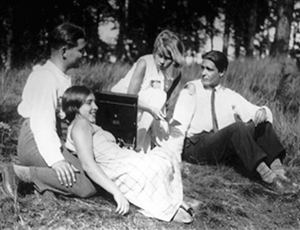
In Flight of the Red Balloon, he floats around 2007 with his camera and his microphone and turns the concrete into the vague and the vague into the concrete. Like People on Sunday, it's a memoir of the present: proof that cinema is greater than poetry. It is only as nostalgic for Albert Lamorisse's film as the present is for the past; an impossible gulf separate the two, and yet the latter is always inescapable, present in the form of places, memories, connotations. In the 21st century, we are always reminded that there has been so much history as now.

The main characters pose for a picture in Exiled (2006; released in the States in 2007)

Fred Camper is braver than most of us. He dared to write about Johnnie To in terms we secretly wanted to use. In the language we wanted to apply: not in misleading Peckinpah and Leone comparisons, but in sacred words reserved for Grandpas Ford and Hawks, for classical cinema.
Exiled is the marriage of To, the pulp dramatist and comedian, and To, the poet of gangs and personal histories. Sympathetic critics compare the film to a late western, but only because westerns and film noir are the only genres to no longer carry a stigma--they've become sacred cannon. Others meekly say the movies is "more than an action flick," as if a work in that genre is incapable of greatness by default--to be good, it has to be similar to something else.
Exiled is certainly an action film, nothing more, and that is more than enough. It's a gun operetta, with choice solos by Anthony Wong's austerely jowled face, one of the most beautiful in modern cinema.
An actioner is as much about shootouts as a western is about horses and Indians or a film noir is about criminals. Most reviewers need new glasses; they mistake a ricocheting bullet for nihilism. Do they still mix up musical numbers with escapism?

A promotional still for Death Proof (2007)

Why is Jackie Brown Quentin Tarantino's most lasting film? Because it's his least ironic. It's the work of a lover, not an expert. Of a friend, not a taxonomist. Most importantly, it's a movie by someone who believes in the exploitation film, not someone trying to sell their knowledge of the genre. Coincidentally, it's one of his least popular and commercially successful projects.
The extended cut of Death Proof, shown abroad and available on DVD in the US, will last, too. It treats the world of genre movies and general business of commercial filmmaking unironically. It emulates rather than imitates. It has a secret ambition: to move beyond Kill Bill's brand of Jack Hill "sexy feminism." Liberation through transgression: Tarantino's sexual fetishes are no longer suggested, but are instead lingered on; the abrupt, violent conclusion doesn't bring closure--it creates possibilities. Death Proof's free women are in the imagination of a free man.

Friday, January 25, 2008

2007 in Review: Two Subtle Leaps

Everyone has already written about their favorites. I've been lazy. I've spent January cleaning the salt off of my shoes; my fingers stink of vinegar. "What was your top ten for the year?" was a December question. It was asked on slow buses and in movie theater lobbies. Everyone agreed it'd been a "good year." Everyone wanted to know your favorites.
There's a difference between speaking and writing about movies. The problem with writing is that movies age differently from essays. Written words always feel like they're a million years old, already so far behind, but at the same time they don't get old quickly like films, which are so much like people--they get wrinkles, gray hair, they start to forget. What once seemed right becomes questionable. Movies are hard to judge, at least with traditional language. They shift in your memory and they tailor themselves to your experiences. What was a bad movie six months ago becomes a good one. The last year's masterpiece crumbles.

Bill Morrison (left) and Ralph Tyler (right) in a still from Peoples House (2007)

I watched Andrew Bujalski's short Peoples House on the little TV set in my living room, sitting with the remote in my hand. Peoples House is only 8 minutes long. It lives in the extras of the DVD of Mutual Appreciation, Bujalski's second feature, just above the commentary and the trailer. It's Bujaski's first work in video, and his first in widescreen.
Aesthetically, Andrew Bujalski is Maurice Pialat's cousin. He is also Pialat's opposite. We see the same techniques in their films, but used for completely different reasons. Pialat's elliptical edits nonchalantly jump across time; he treats a few seconds or a few months the same way. The things that happened in between, the events we didn't see, have been omitted because they didn't matter. Certain events that we experienced seemed important at the time, but they aren't worth a damn in the long run. It can be heartbreaking.
Bujalski's ellipses instead give us an expansiveness. We cut from scene to scene because those are the moments we're focusing on for now, but the film acknowledges that a lot happened in between, or might have happened at the same time as the actions we're watching.
Peoples House is Bujalski's most elliptical film and his most quickly paced. We see moments from a lazy afternoon: Jerry Peoples (Ralph Tyler) shows Walter (filmmaker Bill Morrison) around his house. They talk about a grand piano, Walter takes a piss, Jerry shows him a sculpture in his back yard where hornets nest. It's set in the outside world Mutual Appreciation's gaps suggest: the subjects are supporting characters from that film. They are not the twentysomethings Bujalski's famous for: they're well-off middle-aged men; they talk about retirement, their children, work. Removed from the aesthetics , settings and subjects of Bujalski's other films, the film shows the expansiveness of his vision. It is a leap forward, and, appropriately enough, a subtle one.

Lars von Trier during the production of The Boss of It All (2006; released in the States in 2007)

Lars von Trier is a liar. He's a traveling magician and a trickster. He distracts you this his left hand so you don't notice what his right hand is doing. He tells a cock-and-bull story while he's sliding your silverware into his jacket.
"The Boss of It All is a light movie," he says, and everyone nods along. We believe because it seems to make sense, like he's done all the detective work for us and, after all, he made it, so he must be right. It's a clever ruse: we don't notice that he's made the greatest leap of his career. He's the emperor who's fooled everyone into thinking he's got no clothes. The truth is that The Boss of It All is the first of von Trier's films to be moral instead of moralistic. Automavision is a fraud, but it's a fraud that's greater than the truth of Dogme.

Tuesday, December 4, 2007

An Opuls Film / The High Sign


A key concept of the classic women's film is the Women's Secret; as manhood is a badge of honor, womanhood is a secret society, a terrifying mystery, a password, The High Sign. The women's films are full of invisible ink and substitution cyphers; to watch them is to be admitted to their secret world. There's more intrigue than in a hundred spy films. There are coded transmissions and cloak-and-dagger adventures, but no one ever get any medals. Men die gloriously in war films, while women have to suffer in melodramas. The women of women's films (and their audiences) recognize each other with passing glances. They know each other’s secret.

"You don't know how a family can surround you at times," says Joan Bennet to James Mason in The Reckless Moment, and of course he responds with a tense "No, I don't." How could he understand?

A little math: Max Ophüls made four pictures in the United States, one every year 1947-1949; only the first one isn’t a
"women's picture"; on those three films, he signed his name Max Opuls, ditching not only the umlaut over his (adopted) surname but that pesky "h" too; and finally, while the first of those was a period piece, the last two were set in contemporary America, and of those The Reckless Moment is the second, making it Ophüls / Opuls’ last American picture.


It’s a blackmail plot: Bennet is the suburban mother with the steely resolve and Mason is the downtown mobster with the Irish brogue. He’s got letters incriminating her teenage daughter in a sleazy older lover’s death; he trails off while reading one aloud before the suggestive details become too strong. He’s in over his head; he’s the innocent. Being a criminal doesn’t prepare you for being a woman. He’s a naïf, taking the blame with his dying breath at the end of the film; he might absolve her of police action, but it’s nothing compared to her personal burden. The closest she can ever come to showing her emotions is by lying. In the final shot, with three men dead—Mason, his co-conspirator, the lover—she tells her husband about the Christmas tree they’re going to get. As she goes down the stairs to answer his telephone call, the camera explores every emotional possibility. She’s in turmoil, but no one notices. We’re in on her secret, and it’s terrifying.

Thursday, September 13, 2007

A Letter to Myself

Dear Ignatius,

The only things you've written lately are excuses. Get on top of it!

Sincerely,
You

Wednesday, August 22, 2007

Soviet Children's Cinema 1: A Childish Film

Over the course of the next few days, I'm hoping to watch as many Soviet children's films as possible.

The shower sequence in a video still taken from a Kultura broadcast of The Foundling (1939)

Was The Foundling made by a child? Or maybe edited by one? The film is childish in the most beautiful sense of the word. It's like a grade schooler retelling a joke: details are stretched out, punchlines are mangled.
It's a reversal of the adult rules of comic order. A broken shower head commands our attention more than the mess it causes all over the bathroom walls or the people it worries; a traffic cop is shown repeatedly stopping a man from crossing the street in a rambling take. Scenes are played as if the previous ones have already been forgotten. It's small but ungainly, compact yet in over its head. Shot lengths, speeds and reaction shots seem out of scale. There are physical discrepancies within the frame, too: a short, pudgy woman argues with a lanky man; a tiny girl stands beside a balloon vendor with stilt-like legs; a long, narrow carpet runs treacherously through the hallway of a communal apartment (an early shot features a boy instinctively untangling it with his foot); a young soldier, whose gigantic hands and jutting chin bring together everything that can seem awkward about the human body, crouches wordlessly beside two young girls.
The children in the film speak too slow and too fast, repeat themselves and fidget. They tug at clothes, stand together uncomfortably in the frame and speak with an earnest seriousness amongst themselves. They act like children without consciously attempting to channel "childishness."

Barely over an hour long and ending with a lullaby, The Foundling can be found unsubtitled here.

Friday, August 17, 2007

Russian Notebook 2: Television Continued, Kultura

I'm currently in my father's home town, Rostov-on-the-Don, a hilly city built along the banks of a river in the South of Russia.

I watch television here on the Panasonic in the living room. It has a rabbit ear antenna. Usually I sit on the couch, which at night folds out into a bed. The apartment is on the fourth floor and the living room windows look out on one of the busiest intersections in the city. Across the street, there's an office whose windows are level with ours. I've recently noticed that a young woman who works in the office watches me when I play the living room piano. We keep the windows closed, so she can't tell that the piano is badly out of tune and that I can't play it very well.
In all, the television recieves 11 channels, though many of them are repeats. It recieves several I can't get in Moscow, including regional stations and MTV, whose modest local offices are a block up the street from our apartment.
The Panasonic does not get Kultura (Культура), which broadcasts Soviet films in the day time and symphonic concerts and foreign films in the evening (in the my first week, I saw an Oshima, a Moretti and a Jancso). The Soviet films are the real treasure--many of them pre-war, all of them in original aspect ratios, not just well-known pictures (next week brings The Mirror and Cranes Are Flying) but obscure and underrated ones as well. Musicals, lavish period films and war pictures are all shown without repeats and with minimal commercial interruptions. Silent films are not shown.
It's a challenge figuring out what the movies are at times without a steady Internet connection. There're plenty of television listings in the right-wing weeklies, but I'm little too embarassed to buy them or even be seen paging through one at a newstand. I keep a little red notebook into which I jot showtimes as they're advertised. I've turned into a serious television viewer, setting aside evening hours, looking forward to marathons, double-checking my daily Kultura itinerary.

Russian Notebook 1: Crime Television

I'm living the month of August in Russia. One of my intentions was to try and document as much about Russian film culture as I could, but very early on I got sick and ended up bed-ridden for a while. During that time, I found myself watching a lot of Russian television.
  1. "Crime" shows dominate Russian television; they've been on top for quite a while, a decade maybe--enough for people to be long tired of them. But they're cheap to make and easy to advertise, so it's unlikely they'll leave airwaves anytime soon. In fact, their prevalence and interchangeability make them the defining genre of Russian television; it's often difficult to figure out which show you're watching--switching between channels seems more like intercutting than. The remote control becomes a method for home editing: from car chase to assassination to a busy street corner to car chase again without ever breaking continuity.
  2. "Crime" shows are both documentary and fiction-based (in Russian, fiction films are refered to as artistic films), though there's very little difference in content and presentation between the two. "True crime" shows often center around sensationalistic "investigative journalism" peppered with shots of real-life deaths, dramatic re-enactments and flashy graphics that resemble the credits and intertitles of the "fictional" crime shows (or is it the other way around?). The host of one show, which focues almost exclusively on bloody traffic accidents in Moscow, carries a small Handycam as a prop, pointing it at the proceedings; we never see what he's recording and can assume that the prop camera is never turned on.
  3. Despite being shot exlusively on video (shooting on film is very rare in Russia, where theatrical features are almost exclusively shot on HD), almost all fictional crime shows use post-synced dialogue. There is something fascinating about handheld, often rough images combined with calm, crisp sounds. On television, Moscow is the quietest city in the world, and the wind is never blowing in the country side. Foreign films and programs, which make up a sizeable portion of Russian television, are always shown dubbed, so this forms an odd aesthetic continuity.

Sunday, July 8, 2007

A Conversation with Usama Alshaibi About Nice Bombs

Usama Alshaibi smiles frequently. Luckily, he’s got a beautiful, toothy grin. The lower half of his face is covered by a black forest of stubble that’s too short to be called a beard but too thick to be called anything else.

If it were any other season, we would call it a Friday evening—but it’s summer, so we say Friday afternoon (the Sun, after all, isn’t setting for a while). Alshaibi’s 2006 documentary Nice Bombs begins its first theatrical runs next week, and I’ve come by the apartment he shares with his wife and frequent collaborator, Kristie Alshaibi, to talk about the movie. I’m early, and one of the Alshaibis’ neighbors lets me up, asking whether I’m here for the party.

After a brief tour and a demonstration of Kristie's Theremin, Usama and I sit down in the living room, which is spacious and neatly kept.


Nice Bombs has had a longer gestation than a lot of your other work.

Oh, yeah absolutely. I mean it’s my trying to branch out beyond dirty basements and underground fests. Nothing against dirty basements and underground fests, but always with this movie I was trying to appeal to a broader audience. I mean, I still make all sorts of films that I know are not gonna have any commercial success or theatrical distribution—but, eventually, they get in other festivals and on compilations. But with Nice Bombs there’s an immediacy I wanted. I wanted to get it out there and I wanted other people to help me out.

Maybe it doesn’t have a longer gestation, maybe there’s a kind of inverse relationship: some of [your short] films were made very quickly but it took them a very long time to…well, they’ll play at festivals for years. With Nice Bombs it took you a long time to make it—you started it in 2004, so it took two years and now it’s getting theatrical distribution a year later.

But, as you know, as film business goes, it’s not unusual in my time frame. It’s pretty normal. I mean, if I were a big production, it would take the same amount of time. What we spent so much time on was post-production. I was really able to do a lot and focus on things in a way I wasn’t able to before. I had access to real studios and engineers and a full ensemble of musicians who were writing music for specific scenes…and that was weird…what was the question?

Well, it was more of a statement. It seems like a lot of…well, for example, King for a Day seems to have come together very quickly.

Well, King for a Day, that musical I was doing kind of quietly until it was out there because I wasn’t sure it was gonna make it.

Going back to Nice Bombs—with Nice Bombs the first time we showed it in Chicago it was a much longer cut, and since then I’ve edited it down to 76 minutes, which, to me, has made it an even more powerful film.

Was this the one that was screened at the Music Box?

Yeah. So, from that period on, I got distribution and now it’s getting a theatrical release…I think also it is technically my first feature. To have this kind of success—for me, it’s great. Some other filmmakers will be like, “Whatever.” But for me, a ten day run at the Pioneer and a release at the Gene Siskel [Film Center] and hopefully more…well, I’ve never gotten that before. I think it’s a testament to the film and everyone who’s worked on it.

Even though I do use my story and myself, I’ve also made it very accessible. People who have always disliked my work, relatives who just don’t go near my stuff, it’s very appealing to them, and I like that. Even my wife’s relatives, who live in the Midwest. Regular folks. Americans from suburban neighborhoods. Republicans watch this and they really dig it, they’re really into it. They get attached to the characters—the people in the movie. So I think that’s something new that I’ve discovered about myself and what I’m capable of. If I just take these risks and put myself out there, and get away from these boundaries, these artificial boundaries that we set for ourselves when we make any form of art, you know?

I think making films oftentimes involves leaping in, leaping into something. We have, I guess, the myth of individuality, but you have to let the world in, not shut it out.

Absolutely. And to me it’s also gotta be exciting. If it scares me, if I’m, like, nervous, if I’m like “I don’t know if I can do this,” that means the project is good. I’m on to something. If it’s like, “Oh, I know this, this is easy, this is already done in my head”—well, why go through the process? I guess I like discovering things.

The documentary element is not necessarily new, because I also approached my narrative work like that. Some of my early shorts had no script, just a very abstract idea. Or I’d be writing as I was shooting. But with this, it was even more abstract. I was able to kind of take all of that and put it into something coherent. But the experience and the film are almost two different things. Experience inspired me to take the camera and do all of this stuff, but my internalized experience and its connection to the film is something I have that makes things exciting and significant for me. So now I’m approaching everything like that. I don’t know what the hell I’m doing. Part of it and part of what I do is a mystery. It’s a dark tunnel I’m walking into and I only have a little light. Stuff might come out…[laughs] Open to the unexpected.

Do you feel like Nice Bombs was a continuation of your work or do think it’s more of an expansion? Because it doesn’t…to an outside observer it seems odd. To someone who has never met you and has only seen your movies, it seems like a strange direction to take.

Well, what was the longest film I did before that? Muhammad and Jane. All about a European-Iraqi character who comes back to the United States. He was just in Iraq and the United States in the movie is preparing to go to war. It’s this fictional aspect to real life, to something that was happening politically in the street. In fact, we shot part of the movie at an Iraq war protest, and, I think it was on my mind.

Ignatius, I always had this idea that I would go back to Iraq before I picked up a camera and started making films. It seemed like a natural progression. I don’t really think I have enough work out there on this scale to say I have any set way of doing things. I like to surprise myself. I don’t feel like I’m locked down in any sort of genre or form of filmmaking.

Well, maybe it’s best not to have a set way of doing things. Maybe it’s best just to approach everything as if you’ve never done it before.

It’s funny that you say that, because my next film, which is called Baghdad, Iowa, sort of takes what I love about documentaries and takes what I like about fiction filmmaking and blends it in this not really noticeable way. Because documentary is also a form of fiction-making. People don’t realize that. You’re still manipulating information to convey something.

Tell me about Baghdad, Iowa.

I started this a while ago, sort of quietly, because I don’t know what I’m doing sometimes until it’s forming. It was really a sort of organic process. It came out of wanting philosophically to explore more of Nice Bombs, but also realizing that I had to end this movie and couldn’t keep going on and expounding for hours. And so Nice Bombs was in a way looking back to the Middle East, to my past there and then returning—completing something. Baghdad, Iowa is my returning here. And I came from Baghdad, Iraq and landed in Iowa, which is the first place I lived in the United States. My father went to school in Iowa City, Iowa. So my impression of the world was very Americanized but also was Iraqi. And the movie is an exploration of that, in a very surreal way.

You said earlier—I think at the very beginning of the interview—that to you Nice Bombs was a film with a broader appeal, a movie that was meant to be shown more theatrically, rather than at small festivals.

I guess I wanted to make something accessible, I wanted to make something that didn’t have…I guess what I’ve saying is that, since my experience is so unique, I didn’t have a very good perspective on it. Because it was so much about my experience, I needed outside eyes. So I got producers and I worked with editors. I even had a test audience. Just to make sense of it. There was stuff that I just assumed people would figure out. I was very careful—you have to keep in mind, Ignatius, that were a lot of Iraqi docs that came out around that time and before mine, very quickly. And I didn’t want to make something that just lasted until the war ended. I wanted to make something specifically about the situation, but also universal. I think that’s what I learned—a certain mythology that applies to everyone, then you’ve created something more powerful than the specifics of a narrative.

Do you think that Nice Bombs is an American film?

I would have to say that [long pause] it is an American film, because it's about a journey that ends in America, and I think that a lot of immigrants have restless blood in their systems and in their families because they’re not content and something, politically or socially, brings them to places like the West, or America. But at the same time, there’s that great pride in heritage—which is very American. Returning to a place and realizing that you don’t belong is an American story. It’s played in a very literal way—because there’s war, it’s very dramatic. I wouldn’t dare to say I’m an “Iraqi” Iraqi. But at the same time, I am from Iraq. Being an Iraqi American is a closer citizenship title. I feel American.

You can make an American film without being an American. There are more great American films than great American filmmakers.

I do like this idea that things can be international and I always strive to make things that can be appreciated on an abstract level: no dialogue just sounds, visuals. I do feel that Nice Bombs has an international appeal, and I want to make more films like that. I do feel that I have an American vibe that comes out in the movie, especially some of my ignorance and stupidity. Being in a place and just…“What the fuck am I doing?” And being very self-indulgent in that approach. That’s the only way I know how to be; I can’t pretend to be this Arab man, because I’m not. I think my cousin in the movie reflects a lot of that in me…
I think there’s a cowboy attitude—an adventurous, risk-taking quality about Americans. A lot of my cousins that live here thought I was nuts. They were the ones that protested the most, telling me I was crazy.

I remember your mother in the film threatening to disown you.

That we actually cut out. We’re gonna put it on the DVD extras.

She still remembers that, and was still mad after I got back. I don’t know if I’ve told you this, but she had a picture of me near her bed, and she set it [motions placing a photograph face down] so that she didn’t have to look at me. What I went through to make this film! [laughs] Everything’s cool now, though.

You talked earlier about the other Iraq films that came out from 2004 to 2006. For me, what separates your movie from them, is that, in documentaries, especially in American documentaries, there’s a tendency to play dumb, to make a movie to “explain” something rather than document it. Iraq is a situation that’s very hard to explain. Instead of having an explanation and using images to back it up, you’re going out and showing us something, and because of that we might draw a conclusion.

In some ways, I’d say it’s your most subversive film, not in the sense that it’s actively trying to subvert us, but that it is subverting us. I’ve seen it, and I’m infected, I’m sick with Nice Bombs, because there are moments in it I’m going to remember any time I think about Iraq for long enough.

Is it because you felt like you were taken there?

It’s little things. The cat with the flies swarming around its face, and then the old man comes and throws it off screen. Or your father playing with his camcorder. It’s little moments like that that make it a much more human film.

It also makes it a more complicated, a more contradictory film. There’s a tendency to streamline statements, to make sure there aren’t any contradictions in them…

You’re tapping into something there, because, yes, on one layer I’m constructing this portrait, but my internal linear narrative is based on something slightly mysterious to me. There’s no logic or rationale. So, when you remember those flies—I reacted the same way when I saw it and shot it, but I had to bring that emotion in, I had to leave it up there for a little bit and make sure that it worked each time. Because I was reacting to something, and I was hoping that others were [as well]—and they were. I don’t know what’s inside of that, and that meaning keeps changing.

Which is, I think, what makes it better, because you’re not something concrete to each moment. It’s an image that’s mysterious, and as an audience, we project something on to it.

I think any time you are watching a film, you start asking, questioning these basic things inside yourself. Like, for example, people who are sympathetic to the cat: does it bother them? Do they ever ask themselves: “Why do I care about this cat? There’s war, there are all these things going on, why do I care?” There’s a dilemma, there’s this draw, this emotional pull. We can’t help it.

I was also very conscious of animals throughout the whole movie.

Well, it’s not the first cat we see…

There’s a monkey, the dogs…[laughs] I guess I was looking for things that reminded me of my childhood but, in the context of war, were really quite alarming. You almost wouldn’t look at it, but, if you understood animals…the way that dog was behaving, with his tail between his legs, you know this dog has been severely beaten. When dogs have been abused, they’re so terrified to be near you.

The only dead people that you see [in the movie] are from when I was shooting the TV screen, on the news.

Otherwise it would just turn into a Frontline documentary. That’s fine. That’s their job and they’re good at it. I couldn’t do that, and, instead of fighting it and spending 20 years on it, I just let go and allowed everything to unfold, almost treating it like I was on vacation…

It feels like it’s assembled from home videos…well, it is assembled from home videos. I mean, you’re shooting it with your family. To me, that’s one of the contradictions of it: there’s a grimness to it, but people are still being very playful. It’s not all gloom and doom.

And that would have been a bad idea. I can show a situation, and I can show a mood that was there, but it’s up to…well, I there were some parts were the music was little melancholy and that was on purpose, but I didn’t want to be too over the top.


There is humor. I have a morbid sense of humor--my cousins, my relatives have it. That, to me, is like coping. What else can you do? What else but crack a joke. It seems like the obvious conclusion.

The name of the movie is a joke itself.

Yeah, my sister got mad. She told me to change the title, until I explained it. I think it’s fine.

I’m really proud of it. If I was assassinated tomorrow, I could say, “At least I made Nice Bombs…and some of these smaller, perverted films…”

Now you’re doing the radio thing…

…Vocalo…

Is it something you would’ve pursued if you hadn’t made Nice Bombs? Did making Nice Bombs open you up…

Totally. Opportunities, grants, [jokingly] celebrities, V.I…V.I...V.I.Ps…

I was considering going back to my old skill, washing dishes as a prep cook. I’ve done the most disgusting jobs imaginable. Migrant worker, slave labor. So getting work at Chicago Public Radio, being able to go out and make these mini audio documentaries, it’s great. I love it, I’m getting good at it—they don’t have to be these serious things, I can just make profiles…

I like audio. I always used to seek out other professionals that were good at audio, and now I’m getting better at it. It’s like training. I’m digging the job. It keeps me fresh and it makes me more excited about my work and it makes me delve deeper into things.

Friday, May 25, 2007

Textures 1: The Walls in The Passion of Joan of Arc

a still from The Passion of Joan of Arc

The walls of the set of Carl Theodor Dreyer's The Passion of Joan of Arc were painted light pink. The reason is simple: on black and white film, the color would come out as a light gray, therefore preserving the texture while seeming to us to be almost white; in fact, we remember them as white: white and bleak, with a rough surface we can imagine running our fingers over, chalky like whitewash. They would crumble at the corners or perhaps leave white streaks on our backs if we leaned too hard. We imagine the whitewash slathered by workmen with primitive brushes—something about that set makes it impossible for us to imagine even modern tools working on it; we can feel the cold stone underneath the surface of the paint, cold like a cellar wall, even though we know very well that underneath the paint there is probably nothing but wood and chicken wire and plaster. We've heard, too, that it's not Rene Falconetti's arm that is bled, just a willing stand-in's, but we still wince.

The wall constructs an imaginary place just with its texture: The Passion of Joan of Arc is a film of concrete, harsh surfaces—Joan's oily face, the rough cloth of the clerics' robes, the iron of the window-bars. But we remember the walls best of all: their uncomfortable angles stick in your mind just as strongly as Falconetti's gracefully pained facial expressions; their starkness seems to taunt her throughout the entire movie.

But the walls are pink—light pink—not gray, and certainly not white. It’s not the real color of the set, but it’s the real color of walls in the film and in our minds. So it’s not the real wall that we see, but something that resides inside of it—a possible image, a ghost maybe. The camera has x-ray vision: it reveals aspects of everyday objects invisible to the naked eye. A harmless pink wall, but buried somewhere within is the possibility of a cruel gray wall; wood and chicken wire and maybe some plaster, but deep inside somewhere there is a cold medieval prison. And Rene Falconetti is just a woman, but buried somewhere in her is a saint. Images make mediums out of everyone. Cinema is a seance.

The camera, after all, doesn't see things the way we see them, regardless of whether it's loaded with color film or black-and-white film or high-speed film. The camera is an instrument that captures images, but it is not an extension of our vision. It’s like a piano and our eyes are like the fingers on the keys and the foot softly pressing the damper pedal, guiding it to produce something we can't on our own.


Friday, May 11, 2007

Science as Literature


Jean Painlevé's short film Le Vampire

The films of Jean Painlevé are not very good science, yes, but they're great cinema.
The later ones--the color ones, especially--veer dangerously close to reality, but
Painlevé's early, sensationalistic science shorts present a view of nature so radically simplified that it becomes something completely new, an imaginary fauna that could only exist in the movies. Familiar animals become mysterious monsters or, via the narration, take on human characteristics. The sea is an alien planet, not because it is so removed from our experience, but because Painlevé has said it is. Tangential connections are made between unrelated species; Painlevé is like a writer who treats biology as literature, Darwin as Shakespeare. Themes and characters might be borrowed from previous works (the world of science), but the stories are distinctly the director's own. Jean Painlevé is Celine and Julie at the zoo.

In Le Vampire, Murnau and Schrek's Nosferatu interacts with a vampire bat, paraded with its guinea pig prey in front of a stagy backdrop. The vampire bat's bite is like a trick--in fact, animals in Painlevé's films seem as though they're gifted in sleight-of-hand and escapism, or as though his beloved ocean was a circus, or maybe, as the score suggests, a night club act.